A First Visit to a Community Shoreline Walk
A community shoreline walk is easier to join when you confirm the meeting place, understand the route, and know how to take part without guessing.
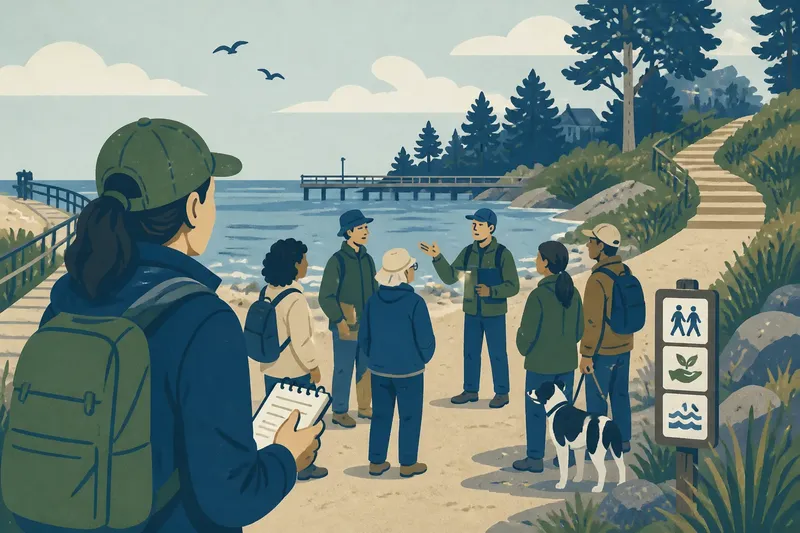
The most common mistake on a first community shoreline walk is assuming that showing up at the water is enough. A vague meeting point or an unclear sense of the event’s purpose can leave you searching while the group moves on, or listening for the wrong kind of information. A few small checks make it easier to join the gathering and understand how its conversations work.
These walks may be hosted by a library, neighborhood association, harbor group, conservation organization, or cultural center. Some follow a planned route; others pause wherever a question or conversation leads. The useful preparation is not memorizing local history. It is knowing how to arrive, participate, and distinguish what people share from what you observe yourself.
Confirm the gathering
Start with the organization that announced the walk. Check its current event notice, website, library calendar, or social media post for the precise meeting point, start time, expected duration, and a contact method. A description such as “near the pier” may cover several entrances. Ask where participants should stand and how to recognize the host rather than relying on an old listing.
Imagine the notice says to meet at the public pier, but the harbor entrance has two paths and no visible event sign. Your starting information is the vague location and the host’s contact details. Send a message asking which entrance to use; if no reply arrives, reach the harbor early and look for the event host or ask staff where public gatherings normally meet. The result is a clear decision about where to wait instead of a guess about which path the group will take.
Check the route details
A map pin shows a destination, not necessarily the route to reach it. Check the host’s description alongside a map, and ask whether the walk uses stairs, a ramp, sand, or a narrow path. If you need a smoother surface, places to sit, or a route without stairs, ask the organizer what the walk involves. Find out whether the group returns to its starting point, ends elsewhere, or passes a convenient place to leave early.
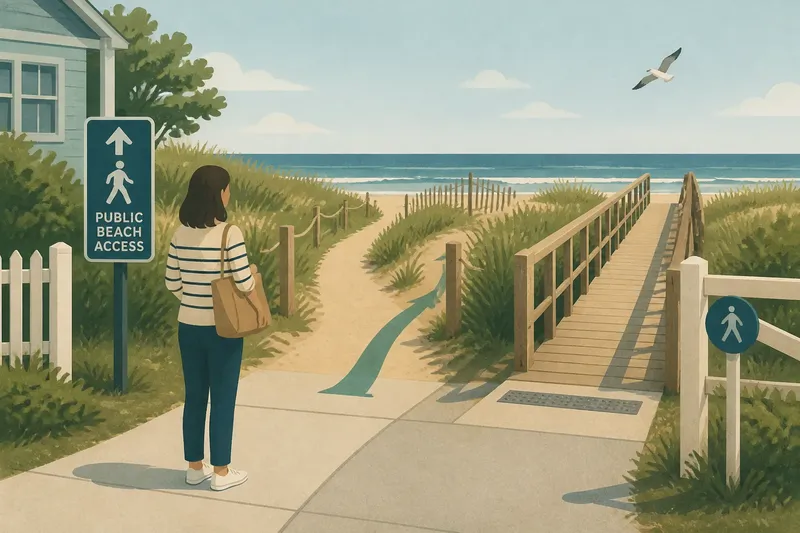
Use the answers to decide whether the walk fits your needs and what to bring. If the route includes a section that does not work for you, ask whether there is an accessible alternative or a way to join for only part of the event. A public shoreline can have several entrances, and the nearest one may not be the most suitable.
Make arrival easy
Arrive with enough time to locate the host, check the surroundings, and settle in before introductions. Look for a sign, a small group, or someone carrying event materials. If the meeting point remains uncertain, ask the organizer or a clearly identifiable host rather than wandering toward the water to find the group.
Before setting out, keep the current event notice available on your phone or save the host’s contact details. If mobile service is unreliable in the area, note the meeting landmark and any alternate instructions while you still have a connection. These simple choices can make a late change easier to handle.
Understand the format
Ask whether the host plans to give a talk, pause for discussion, or keep a steady walking pace. Some events are led by a local historian or shoreline steward; others are neighborly strolls where participants contribute what they know. Knowing the format helps you take part without expecting a lecture or feeling that you must provide one.
If the walk has a stated focus, such as public access, habitat care, or a community memory, listen for how it shapes the route and stops. A brief question about the event’s purpose can clarify why the group is gathering at a particular place. You do not need to settle every question during the walk.
Listen without generalizing
Community conversations are made of individual accounts, not a single voice for an entire neighborhood. A participant may describe how they use the route or what they remember about a local change. Treat that as their perspective, and leave room for others to describe the same place differently.
When a discussion touches on a disagreement, listen before drawing conclusions. You can ask where to find public meeting notices or which local organization has more context. Separating a personal recollection, a host’s explanation, and your own observation makes it easier to share what you learned accurately.
Take part with care
Questions about how a place is used can invite fuller conversation than a request for a single date or fact. Try asking who usually comes through, what the host knows about a feature, or where to look for information about public access. Give people room to answer, and avoid pressing someone to speak about a personal or sensitive matter.
Keep your attention moving between the conversation and the surroundings. Notice the path surface, posted signs, or how people share a narrow section of walkway; treat these as observations rather than proof of a larger claim. If you take notes or photographs, avoid recording private conversations and ask before photographing people. Follow the host’s directions around sensitive places.
Prepare for the walk
Match what you bring to the route and the host’s instructions. Comfortable shoes, weather-appropriate layers, and water may suit an informal outing, while a longer or more exposed route may call for other personal items. Keep belongings easy to carry if the group moves between stops.
- Check the current event notice for the meeting point; if it names a precise landmark, use it, and if it is vague, ask the host before leaving.
- Check whether registration is required; if the notice says it is, sign up, and if it does not, contact the organizer if attendance remains unclear.
- Check the route for stairs, sand, or narrow paths; if it suits your needs, plan to join, and if it does not, ask about an alternate route or partial participation.
- Check whether the walk returns to its starting place; if it does, plan your return from there, and if it ends elsewhere, arrange transportation or ask about an early exit.
- Check the host’s description for pace and planned stops; if the format works for you, bring what you need to walk comfortably, and if it does not, ask whether you can join only part of the route.
- Check posted site rules for dogs and restricted areas; if dogs are allowed, follow the stated controls, and if they are not, leave the dog at home.
- Check for work zones or busy entrances along the route; if the host identifies one, follow their directions about where to stand, and if no safe stopping place is clear, keep moving with the group.
Plans can shift, and the group may pause longer than expected or take a different public path. If you need to leave early, tell the host and ask where it makes sense to part from the group. That is clearer than slipping away where someone might wonder whether you need help.
Questions before you go?
Do I need to register?
Check the event notice or ask the host, because some walks welcome drop-ins while others use registration to manage attendance or send updates. If the notice does not say, message the organizer before setting out.
Can I come alone?
Ask the host whether the event is open to individual participants, then introduce yourself when you arrive. You do not need to know another attendee or have prior knowledge of the shoreline.
What if I cannot keep up?
Ask about the route, pace, and planned stops before the group starts. If the full walk does not suit you, ask whether there is a shorter section or a convenient way to leave early.
Should I bring questions?
You can bring a question or simply listen and observe. If a question comes to mind while the group is moving, wait for a pause so the conversation does not interrupt the route.
Carry one question forward
A community shoreline walk can leave you with a useful question rather than a complete account of the place. You might want to know where an access rule is posted, how to find a public meeting notice, or which local group maintains the event calendar. Ask the host where to look, then keep that source separate from what you heard in conversation.
For a first community shoreline walk, that distinction matters: the gathering offers a way to meet people and learn what they choose to share, not a definitive account of every local perspective. Leave with one question you can follow up through a public source, and you will have a practical next step without asking a single walk to explain the whole shore.